Place · Conti Guidi · Tuscan origin
Porciano.
The castle of the Conti Guidi in the Casentino.
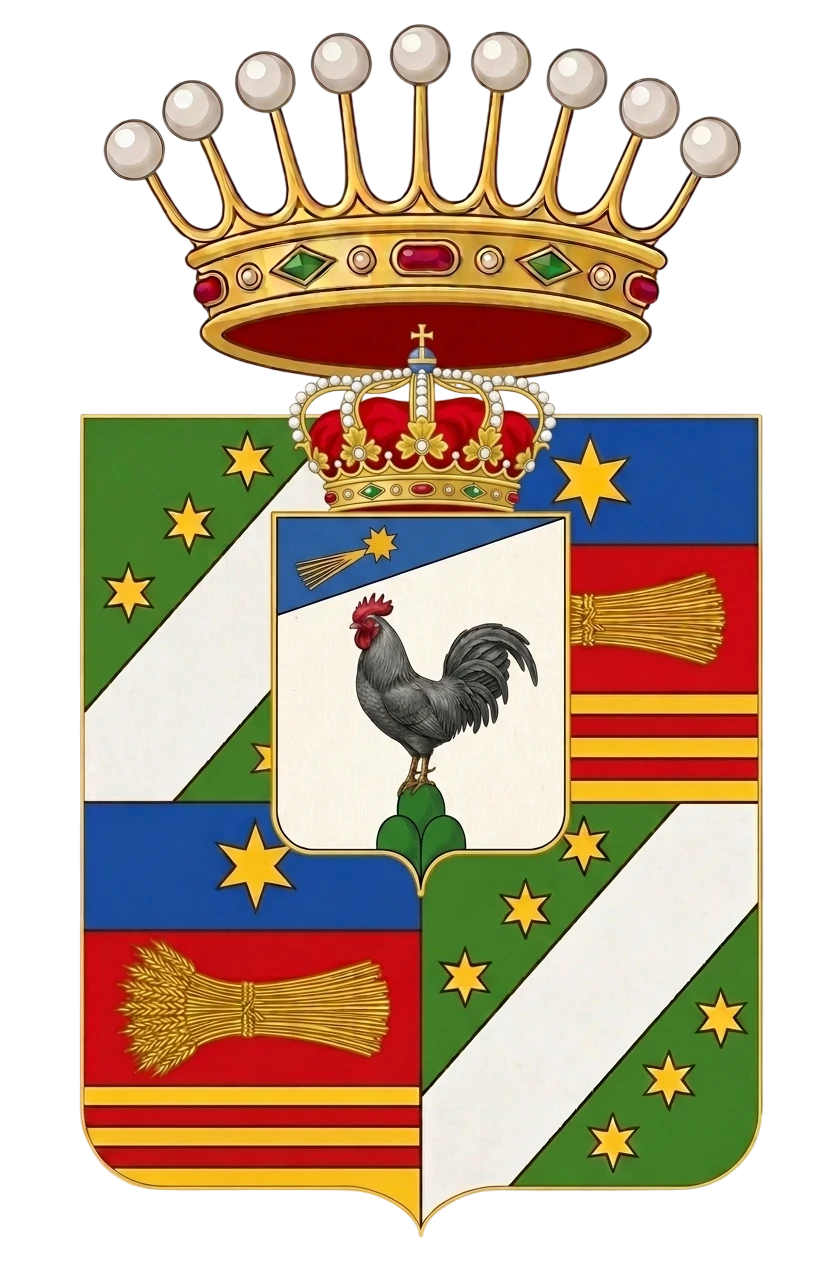
A medieval castle of the Casentino, in the province of Arezzo. Seat of the Conti Guidi branch of Porciano, one of the lines from which descends the stock that would join the House of Guerri (later Guerri dall'Oro).
The history of the castle.
The castle of Porciano stands in a commanding position at the northern entrance of the Casentino, the upper Arno valley in the province of Arezzo. Attested as early as the documents of 1007 and 1017 — alongside the castle of Strumi near Poppi — it is considered one of the first settlements founded by the Conti Guidi in the valley. The fortified complex is dominated by an imposing palace-tower, a singular example of both military and residential architecture, which reached a height of about thirty-five metres.
Between 1250 and the first half of the 14th century, the castle reached its political and cultural peak: it is said that Dante Alighieri was hosted there during his Casentine exile, a sign of the prestige of the Guidi of Porciano. In 1442, the last count, Ludovico, renounced his feudal rights by becoming a monk, and Porciano passed definitively to the Florentine Republic. Restored in the 1960s and 1970s, it preserves today its tower and walls as a precious testimony of the medieval Casentino.
The Conti Guidi were one of the most powerful feudal houses of central Italy, lords of a vast domain straddling Tuscany and Romagna. From the second half of the 13th century the family divided into several branches: Porciano was the seat, together with Modigliana, of the so-called Porciano-Modigliana branch, one of the best-documented Guidi lines.
From this ancient Tuscan stock descends, collaterally, the line that would join the House of Guerri, and then the House of Guerri dall'Oro Gallone. Porciano thus represents one of the family's remote origins, the point where the genealogical memory reaches back to the feudal heart of the medieval Casentino.