Place · Family heart · Salento
Tricase.
Seat of the Principality, from 1651.
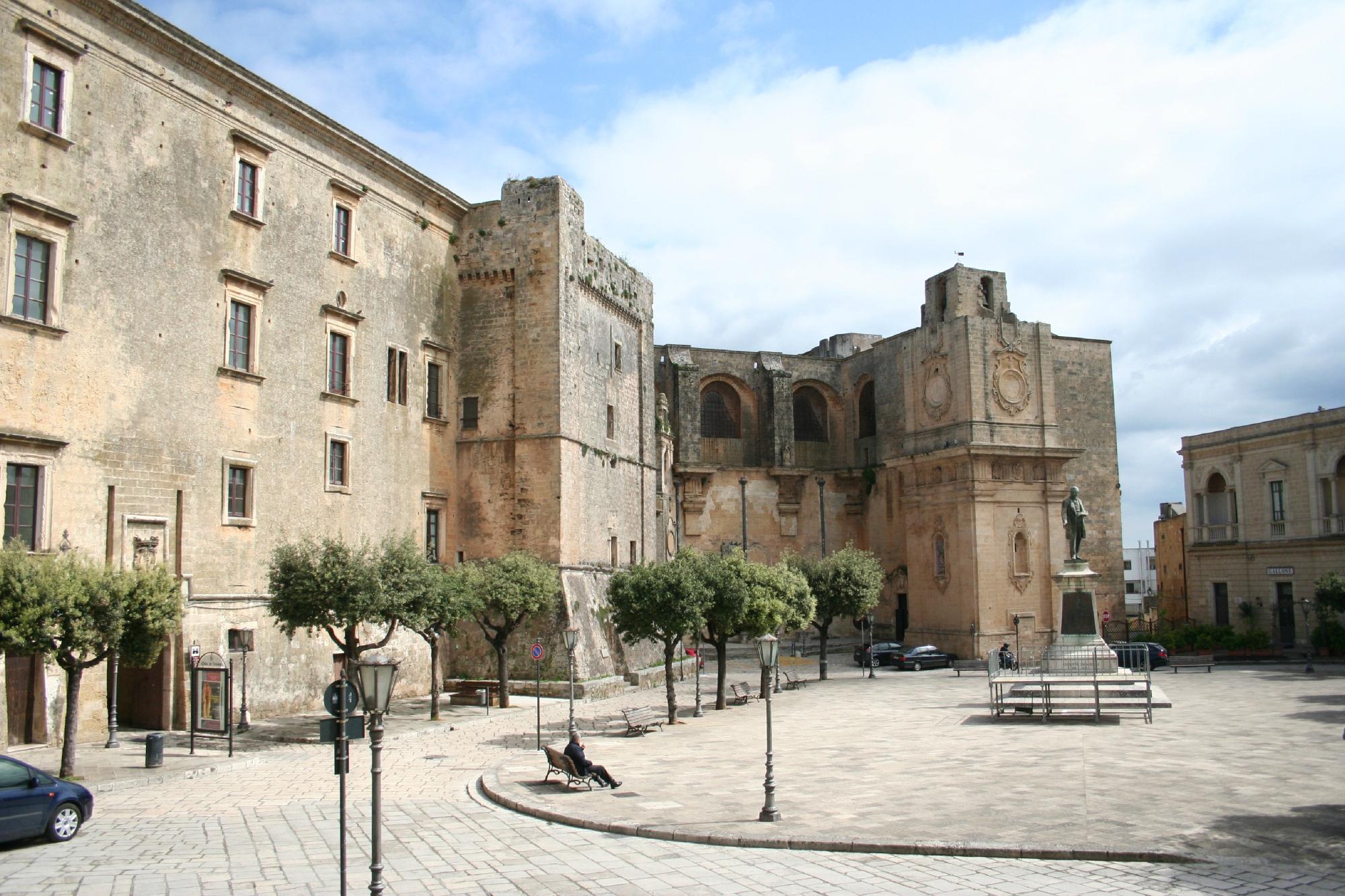
Historic heart of the House of Gallone. The Salento town, with its Princely Palace and the mother church of San Michele Arcangelo — both works of the family — preserves the architectural and civil memory of the Principality granted in 1651 by Philip IV to Stefano II Gallone.
The History of Tricase.
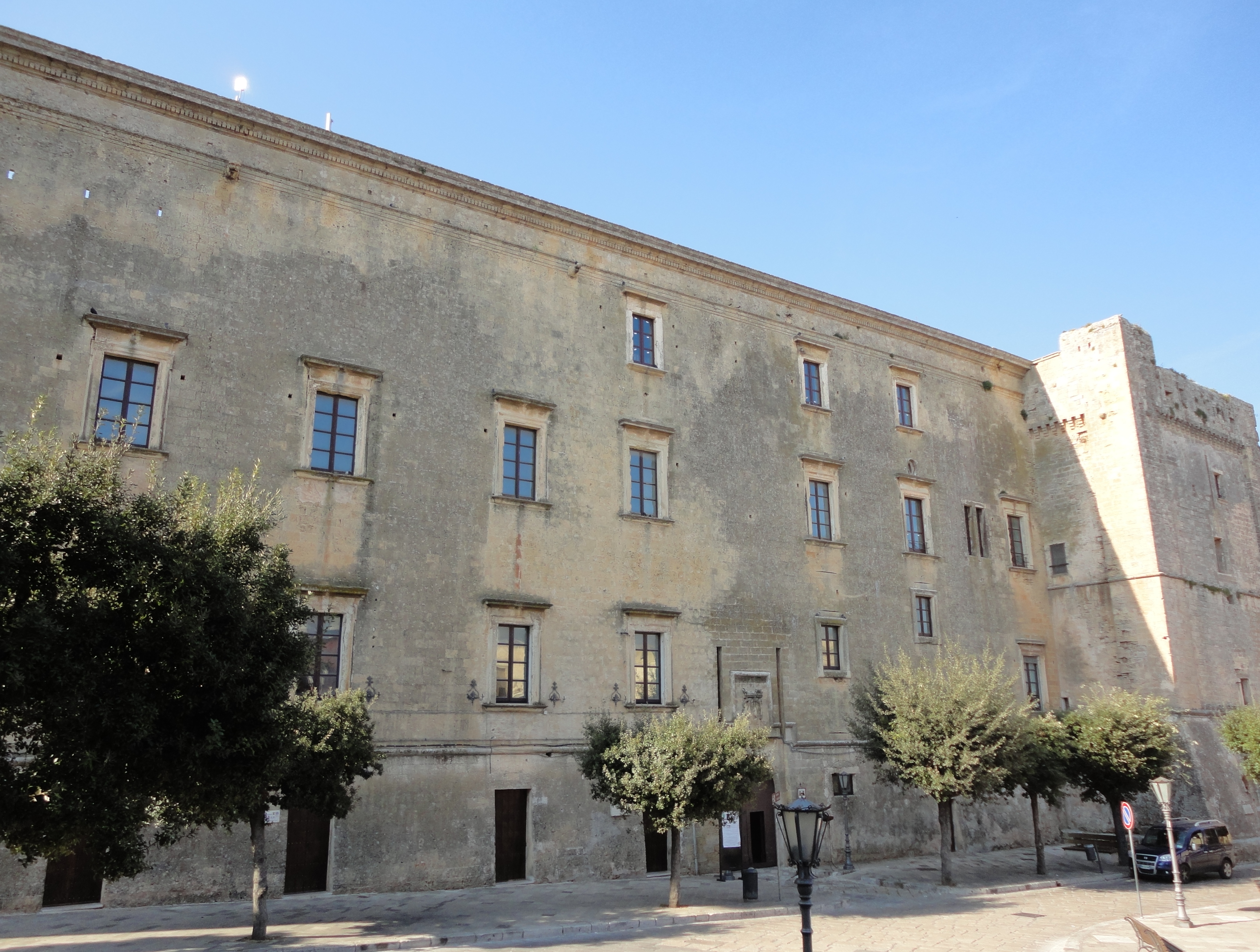
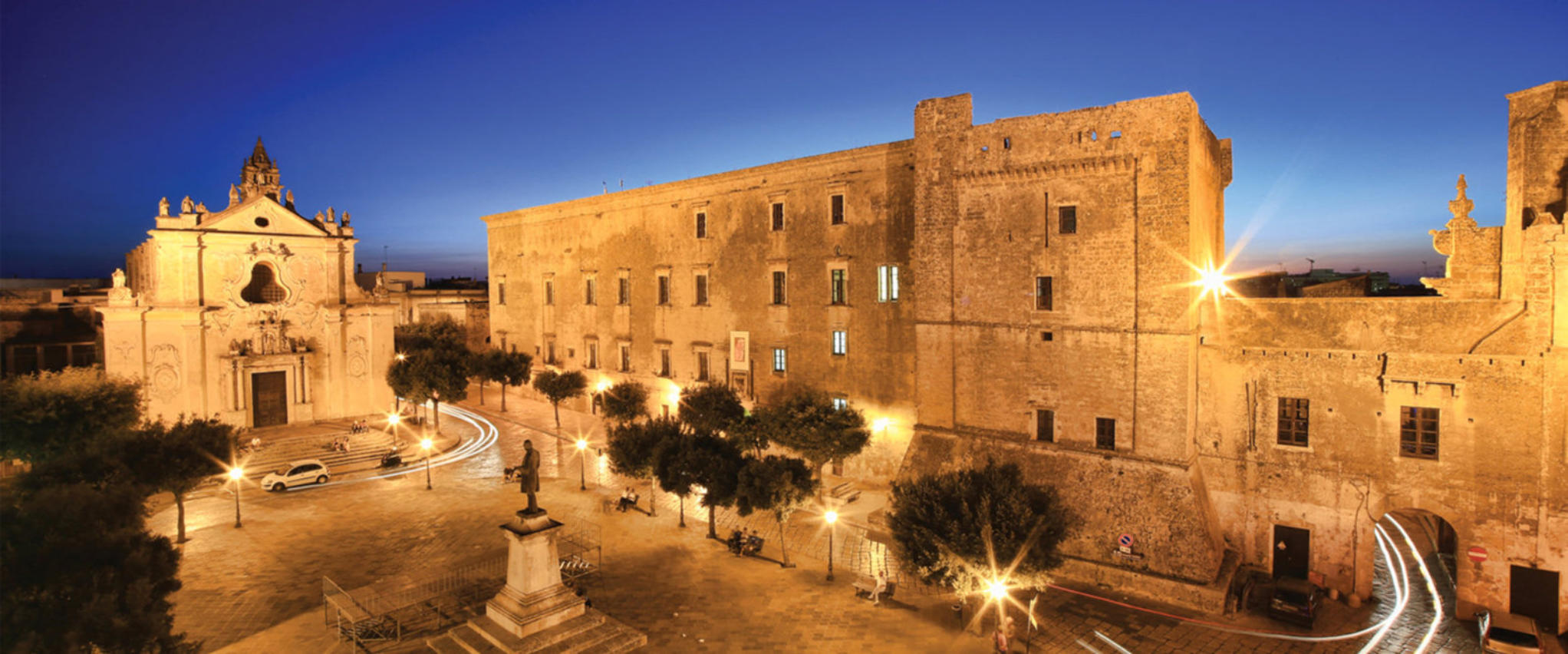
The town's principal monument is the Palazzo Gallone, residence of the Princes of Tricase, built in 1661 by Stefano II Gallone, first Prince of Tricase.
The scant historical sources do not tell us how Tricase arose — anciently "Treccase", then "Trecase", "Tricasi" or "Tricasium" and finally "Tricase" — nor who gave it the name we know today. Reliable documents and certain testimonies are lacking to trace back the primitive events, which remain still neglected, very nebulous and obscure.
On the origins of Tricase there are several versions: it is said that anciently (between the 10th and 11th centuries) there existed three Casali, from the union of which seems to have arisen the first nucleus of dwellings that then gave the name to Tricase. On the naming of these three Casali begin the first divisions among historians.
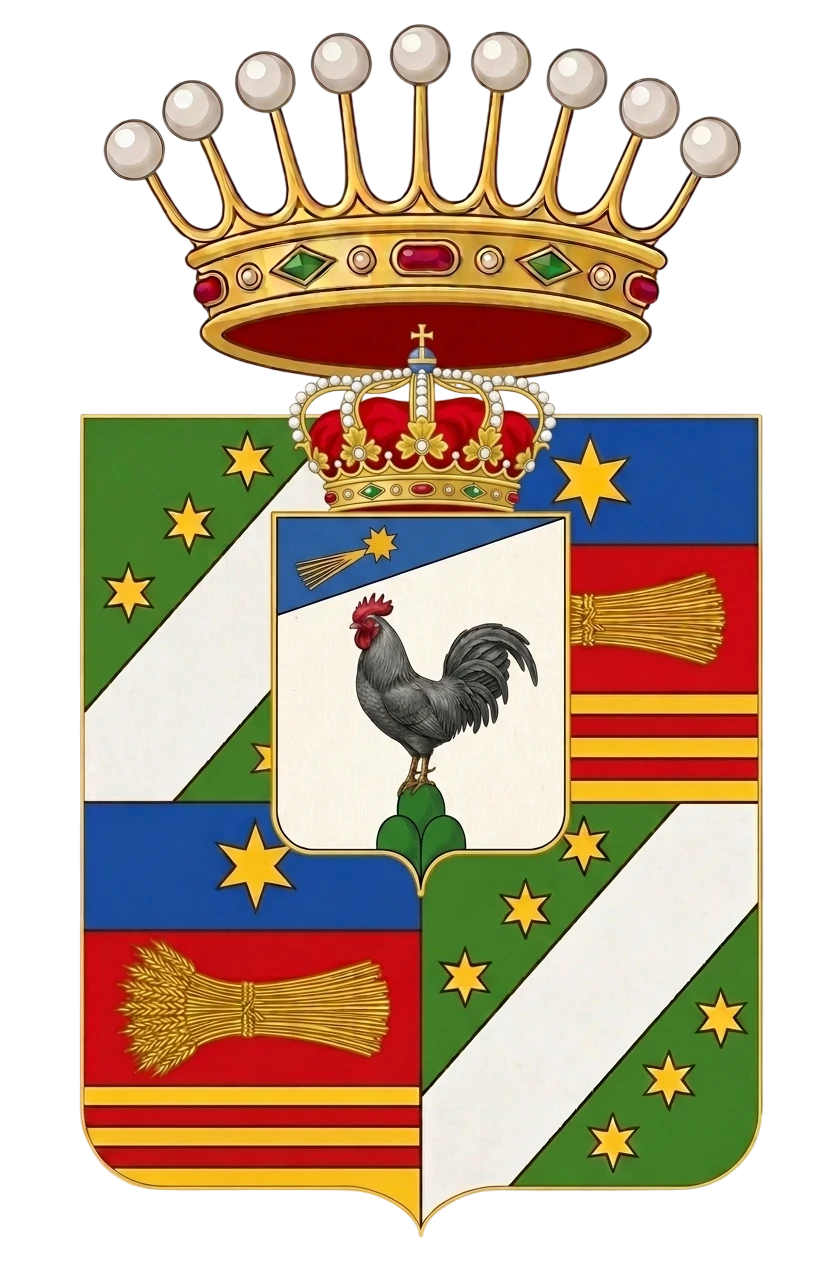
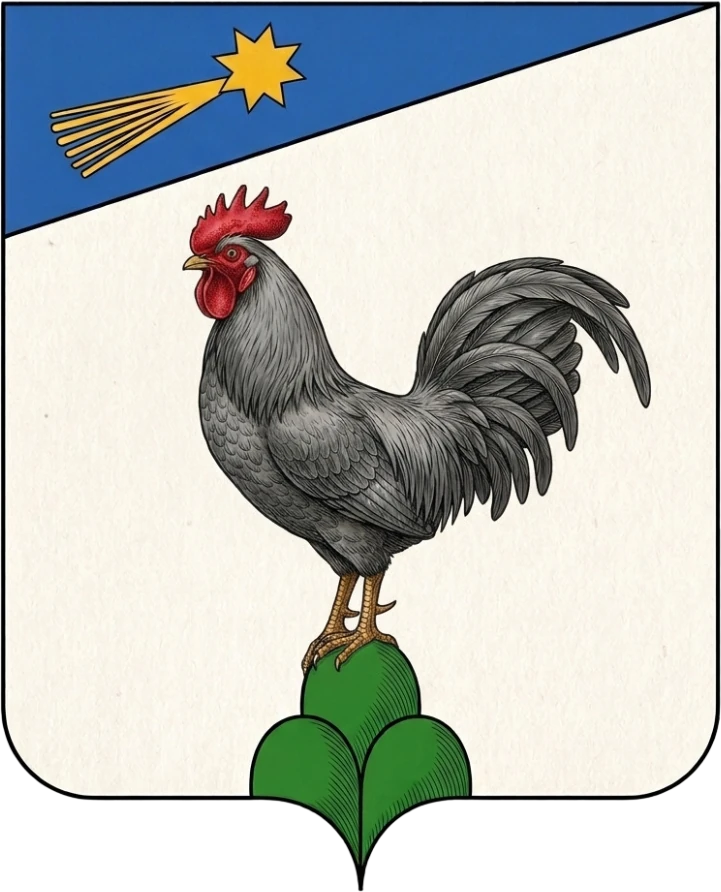
The Tasselli version held them to be Trunco, Monesano and Amito Cuti; the Micetti version, Menderano, Voluro and S. Nicola; the Girolamo Morciano version holds Tricase built from the destruction of the three Casali Abatia, Trunco and Manerano; the Michelangelo d'Elia version maintained Trunco, Manerano and Voluro, adding: "the coat of arms confirms it".
Mgr Giuseppe Ruotolo (in the volume Ugento – Leuca – Alessano, Siena, Cantagalli, 1952) proposes another etymology: more than "three Casali", the word Tricase must be translated inter casas, a village formed in the midst of several other Casali — and indeed Tricase lies among its six hamlets. The union was advised by the need of strength: small, weak and defenceless, the Casali were often invaded and despoiled by the barbarians and by the neighbouring peoples.
According to the Micettian version, Demetrio Micetti was the first Lord of Tricase: having escaped, with others, the destruction of "Leuche" and other Casali by the Saracens, he took refuge with his people in the masseria of Menderano. He wished that the first feudal body, between Tricase and Menderano, should take his name of San Demetrio, that the Mother Church should rise facing his house and that San Demetrio should be patron of the Land. All this, according to Micetti, around the year 1030.
Demetrio's successors were despoiled of the Lordship by Charles I of Anjou (1226–1285) around 1260, perhaps because they were suspected of having sided with the Hohenstaufen. After Charles I, the fief was held by Charles II (1248–1309), who seems to have divided it in half with his faithful Nasone de Galerato around 1270; it then passed to Angelo de Cafalia and to Goffredo de Lavena, then included in the Principality of Taranto, to which the Terra d'Otranto almost entirely belonged.
On 21 September 1401, Raimondello Orsini Del Balzo received Tricase in fief from Ladislaus of Durazzo, king of Naples from 1384 to 1414. He was succeeded in 1406 by his son Giovanni Antonio (who reigned from 1446 to 1463), one of the most powerful barons of the Kingdom, extended over the Avellino area, the Bari area, the Capitanata and the Terra d'Otranto. In 1419 the fief was acquired by Baldassarre and Antonello Della Ratta from the powerful Giovanni Antonio Orsini Del Balzo.
In the summer of 1480, the fleet of Mehmed II (1430–1481) appeared before Otranto: the Turks penetrated the city and, within a few months, devastated countryside and towns. Tricase granted refuge to the refugees of nearby Salete (Depressa), destroyed, and was itself threatened, with the burning of the Mother Church. To Raimondello Del Balzo, count of Castro, an unwelcome surprise fell in 1481 from the people of Tricase.
With the surrender of Otranto, the war against the Turks having ended in September 1481, count Raimondo Del Balzo — who had served at Roca alongside Giulio Antonio Acquaviva, count of Conversano — thought to present himself at his land of Tricase, but found its gate closed: the people did not allow him to reach his houses.
Passing from shouts to deeds, they began to hurl stones at the count, forcing him to take refuge in a place called San Pietro, near the convent of San Domenico. Despite all this, Tricase — together with the county of Ugento, of which it was part — continued to belong to the Del Balzo until 1530.
Before dying, on 25 February 1494, Ferdinand II learned of the intention of Charles VIII of France to invade the Kingdom. Alfonso II abdicated in favour of his son Ferrandino (Ferdinand II), who took refuge in Sicily and asked the help of the Spanish. Almost the whole Kingdom surrendered to Charles VIII; but Brindisi, Gallipoli and Tricase did not bend, remaining faithful to the Aragonese.
In the years of the struggles between Spanish and French, come down to the South with Lautrec and allied with the Venetians, Lecce opened its gates to the French, but Nardò, Castro and Tricase remained faithful to the Imperials. This fidelity it paid dearly, with the reprisals of Tutino, sided with the French, which burned "many olive trees" belonging to the people of Tricase. The French defeated by the Prince of Orange, Charles V became master of the Kingdom: to the people of Tricase, who sent envoys for new privileges, he ordered the Salento coasts furnished with coastal Towers for the sighting of enemy vessels.
Following the paradoxical agreement between Francis I and the Sultan of the Turks, the lands of the Salento were invaded by the Saracen hordes, which devastated Salve and Racale. In 1537, Tricase would have met the same fate had it not been saved by the valiant Spinetto Maramonte, who laid an ambush for a wing of Saracens while they were preparing to besiege the Castle of Tricase. The promptness and courage of the captain spared the people the sad experience of the Turkish occupation of 1480.
In the following years, Tricase passed from Ludovico Benavola of Naples, who had bought it for 4000 ducats, to Pirro Castriota-Scanderberg, a noble family of Albanian origin; from the Castriota it was sold in 1569 to Federico Pappacoda. From Cesare Pappacoda, son of Federico, the Land passed in 1588 to Scipione Santabarbara.
He, in turn, on 20 December 1588, resold it to Alessandro Gallone, whose descendants possessed it until the abolition of feudalism, with the title of Principality obtained at Madrid on 24 March 1651 from Philip IV of Spain.
From 1588 to 1806, until the abolition of feudalism, Tricase remained always in the hands of the Gallone princes. With baron Alessandro I Gallone there began a new period of relative tranquillity: he held the fief with the jurisdiction of the first causes and of the bagliva (judgement of damages to rural estates, election of judges, chancellor and collectors), besides criminal jurisdiction over the inhabitants of S. Eufemia, of the Diocese of Otranto.
In 1571, Alessandro had married Donna Camilla Pisanelli, remembered by the people as the first baroness of Tricase: fixing her residence here, she allowed a vast feudal state and the development of the town in the first half of the 17th century. The princely title was obtained at Madrid on 24 March 1651 from Philip IV of Spain by Stefano II Gallone.
At the beginning of the 17th century, Tricase was administered by a Mayor, four Councillors and a Governor (of the Land of Tricase and of the Casale of Tutino), chosen by the prince from among cultivated persons not of the place, charged with administering justice. The clergy was numerous. In 1624, Cesare Gallone, son of Alessandro, had the Church of San Michele Arcangelo rebuilt, dedicated to the Madonna of the Foggiaro, which housed a San Matteo by Titian the Venetian and other valuable paintings; restored in 1763. In 1670 the Church of San Domenico was erected.
It was necessary to wait until 1752 for an adequate scholastic institution; in 1715 the first spezieria (pharmacy) opened. These were years of misery, famine and epidemics, even more disastrous at Tutino, with an increase in delinquency: in only two years, between Tricase and Tutino, there were three condemned to death. The budget did not improve public services — schools, roads, hygiene — but was absorbed by the payments due to the Government.
A panorama of mid-18th-century Tricase comes from a report by Don Domenico Maroccia, charged by the prince of Terrapiena on the occasion of the marriage of his daughter with the prince of Tricase Giuseppe Domenico Gallone (1704–1766): "Let it not be believed that Tricase, although it had the name of three houses, was a land of three houses. This is a great land which makes some 400 hearths; in this land there are some 600 houses. In this land nothing is lacking: meat, fish, vegetables and fruit."
Maroccia recalls 12 beneficed chapels; one, half a mile from the town, built by the marquis of S. Martino, a rich church with five altars under the title of the Madonna of Constantinople — an octagonal rural church raised in 1684 by the care of the Gattinara, also called "of the Devils" or "Nova", according to the legend that has it built by the devils.
In March 1806, Joseph Bonaparte, brother of Napoleon I, became King of the Two Sicilies and published the edicts on the abolition of feudalism: each Province had Intendants, sub-intendants, Provincial, Municipal and Decurion Councils, and the universitates that since the Middle Ages had upheld civil liberties disappeared. Already in 1801, after the agreement at Florence between Ferdinand IV of Bourbon and the French Republic, a French detachment had stopped at Tricase, lodged in the De Tommasi house and in the princely palace.
In 1807, two English attacks against the port of Tricase were recorded: the troops occupied the Tower of the Port and blew it up with mines. With the fall of Napoleon, in 1815, the Bourbons returned and the restoration of the Italian princes; in this period the Carbonari sects rose to great political importance, orienting themselves towards the three currents of the time: French, Bourbon and English.
In 1848, a year of hopes and popular instances, the college of Tricase elected Giuseppe Pisanelli, though residing in Naples. Born in Tricase to Michelangelo and Anna Mellone on 23 September 1812 and died in Naples on 5 April 1879, a law graduate in 1830, he was a patriot, Deputy to the Neapolitan Parliament (1848), Minister of Grace and Justice in the government of Garibaldi (1860), a distinguished jurist and reformer of codes, an exile in Turin, Paris and London, then Keeper of the Seals in the Minghetti ministry.
In the second half of the 19th century, Alfredo Codacci-Pisanelli (Florence 1861 – Rome 1929) stood out: without being born in Tricase, he had an enormous importance there, elected by the college for seven legislatures, always of the liberal Right; his name is linked to the concession of the Salento railways. In 1902 he created in Tricase the Agricultural Consortium for the Cape of Leuca (A.C.A.I.T.), a cooperative for the cultivation and processing of Levantine tobaccos.
On 16 July 1922 was born in Tricase "Il Tallone d'Italia", a weekly for the interests of the extreme Salento, edited in via Pisanelli and printed at the Raeli printing house, of adherence to the nascent fascism and of an autonomous liberalism. On 4 November 1922 the section of the National Fascist Party was constituted, by a squad named "la disperata". In February 1926, thanks to Giuseppe Cortese, the electrical installations were inaugurated, extended at year's end to Tutino and S. Eufemia.
On 15 May 1935, Tricase lived one of the most tragic days of its recent history: five dead and numerous wounded in the protest of the proletariat against the decision of the Ministry of Corporations to suppress the Azienda Cooperativa Agricola Industriale of the Cape of Leuca, a source of employment for a large part of the population. Ten years later, the section of the Italian Socialist Party affixed a plaque to the memory of the victims on the façade of the former Convent of the Dominicans, today the seat of municipal offices.
Feudal passages.
On the map.
Gallery
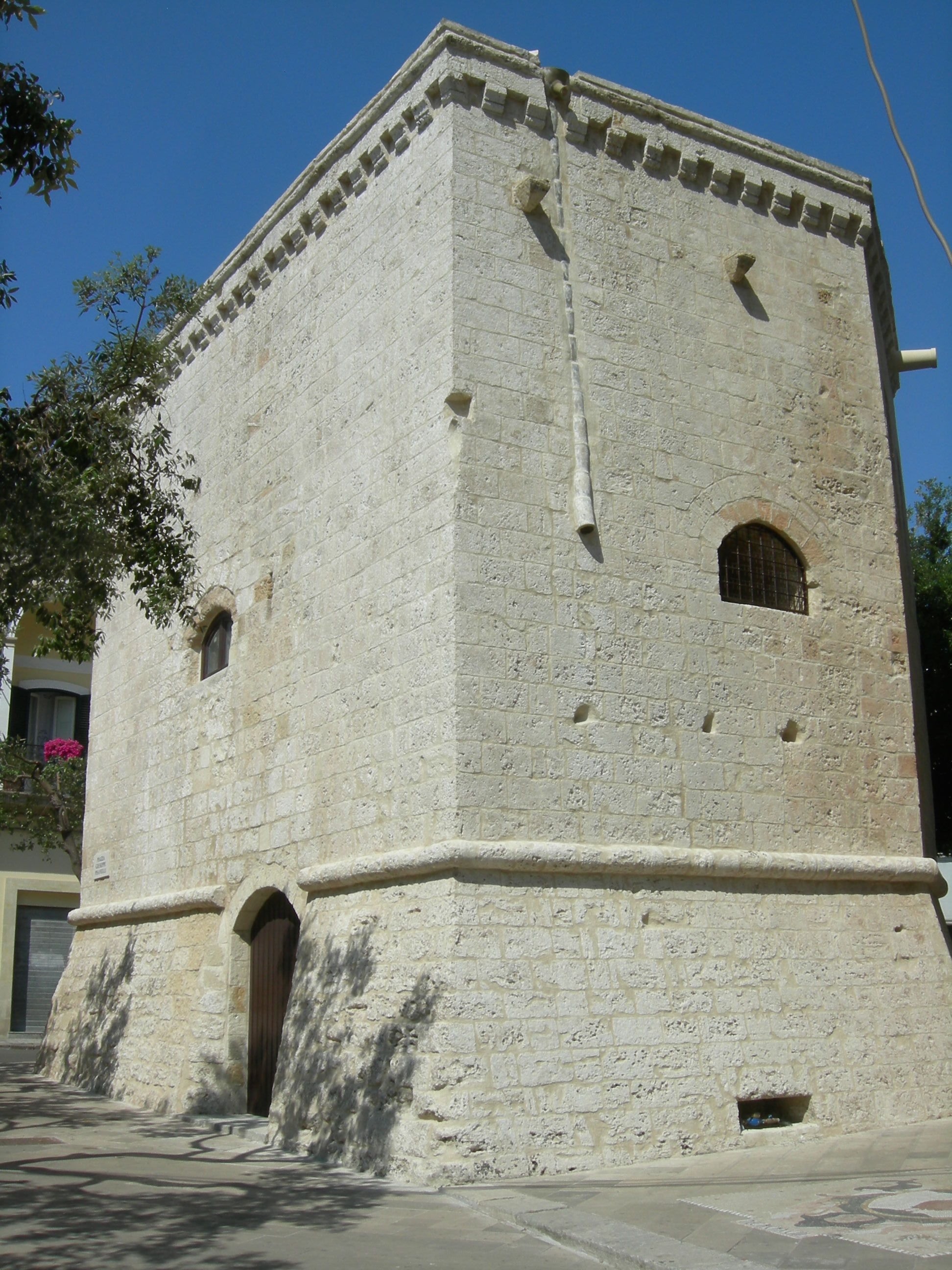
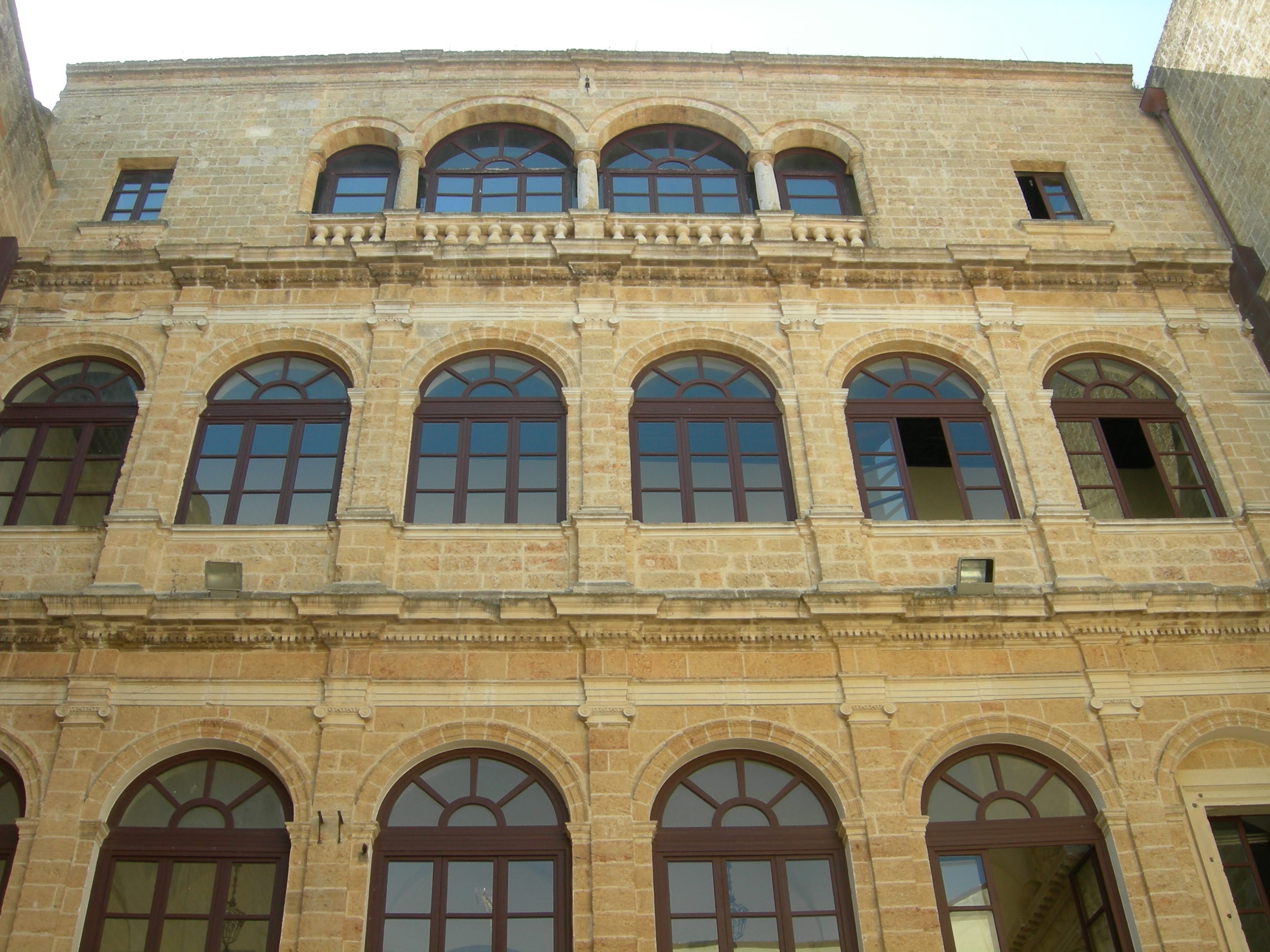
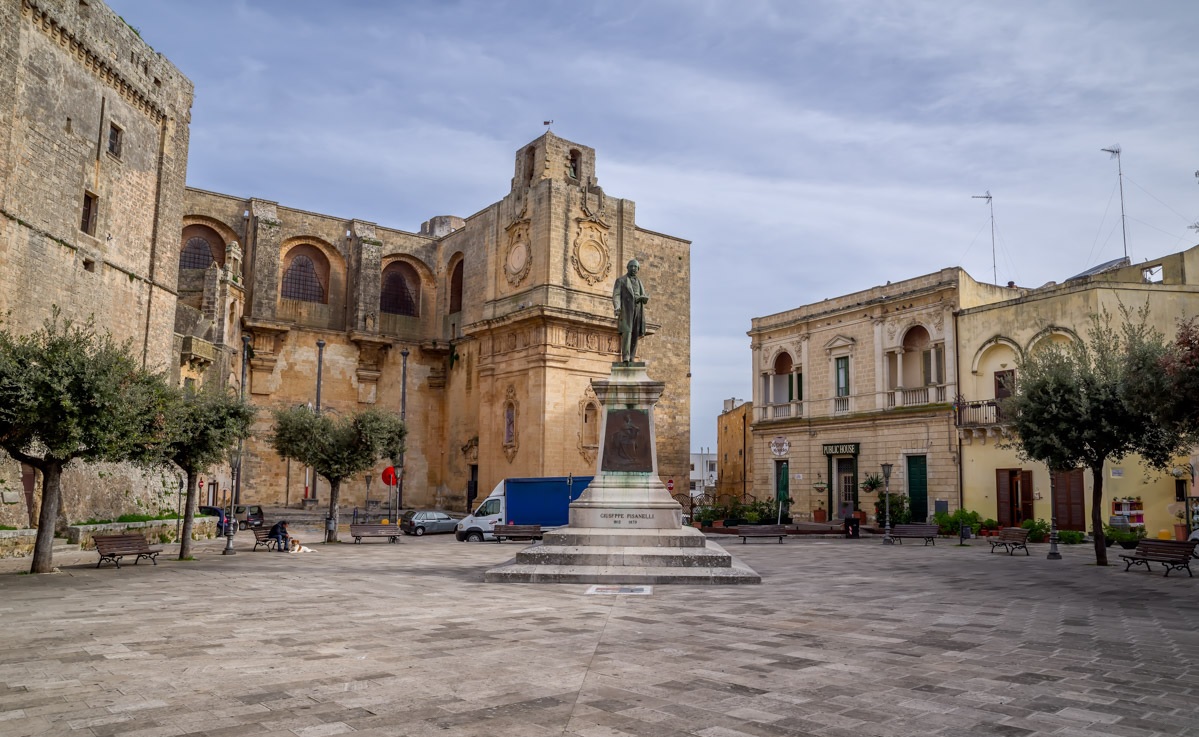
The town, the palace, the civil memory
Videos.
Sources.
- 1 Mgr G. Ruotolo, Ugento – Leuca – Alessano, Siena, Cantagalli Publisher, 1952.
- 2 Local chroniclers cited in the account: L. Tasselli, G. Micetti, Girolamo Morciano, Michelangelo d'Elia.
- 3 Report of Don Domenico Maroccia on Tricase, on the occasion of the marriage of prince Giuseppe Domenico Gallone (1754).