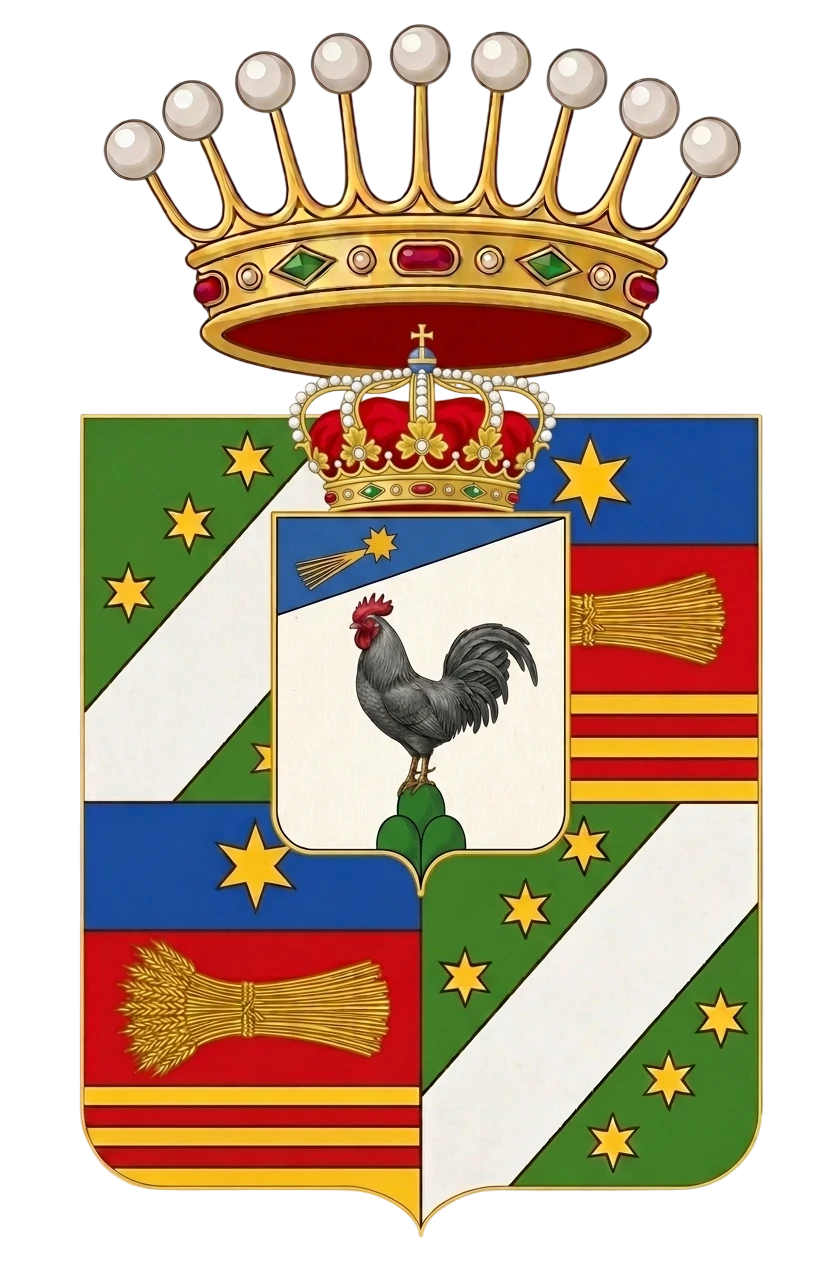
— immagine da inserire —
« El Cid Campeador » (1043–1099)
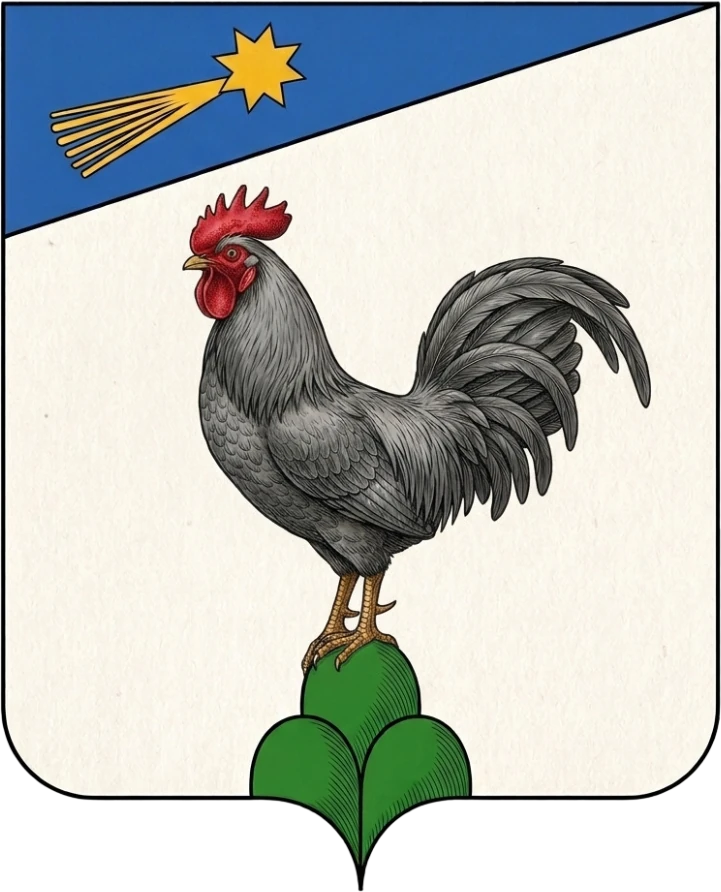 Gallone line Confluent descent · Princes of Tricase
 Famous descent · Middle Ages
El Cid Campeador
Rodrigo Díaz de Vivar — the knight of Castile (1043–1099)
Castilian knight, lord of Vivar and Valencia. From his two daughters, Elvira and María, two lines — through the kings of Navarre and the counts of Barcelona — converge in 1436 (Beaumont × Híjar), then upon the Pignatelli and the Gallone, down to the Guerri dall’Oro Gallone family.
Ancestry — the Laínez.
- 1Purcellob. c. 796, † c. 862 · Governor of Astorga
- 2Laín Purcellizb. c. 819, † c. 869
- 3Diego Laínezb. c. 850
- 4Laín Díazb. c. 880, † c. 950&Jimena Ordóñez de León, b. c. 885, † c. 935 · of the Kings of León
- 5Nuño (Munio) I Laínezb. c. 910, † c. 962 · Count&Froiloba Bermúdez de Cea, b. c. 925, † c. 985 · of the Counts of Cea
- 6Laín Núñez Laínezb. c. 947, † c. 1001 · Count, Lord of Vivar& 975Justa Fernández de Cea, b. c. 954, † c. 990 · of the Counts of Cea
- 7Diego Laínezb. c. 995, † c. 1058 · Lord of Vivar&Teresa Rodríguez Álvarez de Asturias, b. c. 1023, † c. 1043 · of the Counts of Asturias
- ★Rodrigo Díaz de Vivar « El Cid Campeador »b. c. 1043, † 1099 · Lord of Vivar and Valencia& 1074Jimena Díaz de Oviedo, b. c. 1054, † c. 1116 · of the Counts of Oviedo
Rodrigo Díaz de Vivar.
Rodrigo Díaz de Vivar, a Castilian knight, son of Diego Laínez and descendant of the semi-legendary Laín Calvo, was orphaned young and raised alongside the infante Sancho, son of King Ferdinand I of Castile and León. On taking the throne, Sancho named him royal standard-bearer (1065). Around 1066, his victory in single combat against the Navarrese knight Jimeno Garcés — to settle the ownership of border castles disputed between Castile and Navarre — earned him the byname Campeador.
As leader of the royal troops, Rodrigo took part in the war between Sancho II of Castile and his brother Alfonso VI of León, defeated at Llantada (1068) and Golpejera (1072). But when Sancho II died in 1072 beneath the walls of Zamora, Alfonso VI became sovereign of Castile and León. Far from resenting him, the new king honoured the Campeador by granting him the hand of his niece, doña Jimena, in July 1074.
In 1081, an unauthorized expedition into the lands of Toledo, which endangered Alfonso VI’s negotiations to obtain the city, brought about his exile from Castile and the confiscation of his estates. With his mesnada, the Campeador offered his services to the counts of Barcelona; rebuffed, he aided al-Muqtadir, king of Zaragoza, against his brother al-Mundir. In his service he won at Almenar (1082) and near Morella (1084). It was then that he received the byname Cid, from the Arabic sīd, “lord.”
In 1086, Alfonso VI’s defeat by the Almoravids at Sagrajas fostered his reconciliation with Rodrigo, who received substantial domains. In agreement with the king, the Cid set out for the Levant, where between 1087 and 1089 he made tributaries of the Muslim kings of Albarracín and Alpuente and protected Valencia, ruled by his ally al-Qadir.
In 1089, a fresh breach with Alfonso VI brought his final exile, accused of treason. Rodrigo returned to the Levant, protected al-Qadir, and again defeated Berenguer Ramón II at Tévar (1090). His protégé dead, he acted for himself: in July 1093 he laid siege to Valencia, and on 15 June 1094 he entered it, organizing a Christian taifa.
The Cid died on 10 July 1099. His widow doña Jimena, aided by Count Ramón Berenguer III of Barcelona — husband of her daughter María in 1098 — defended Valencia until 1101, when it fell to the Almoravids. From the Cid’s two daughters, Elvira and María, descend the two lines which, through the kings of Navarre, the counts of Barcelona and the dukes of Híjar, converge upon the Pignatelli and the Gallone, down to Léon.
The chains of descent.
- 1Elvira (Cristina) Rodríguez de Vivarb. c. 1077, † 1104 · of the Lords of Vivar and Valencia& 1099Ramiro II Sánchez of Pamplona (Navarre), b. c. 1057, † 1116 · of the Kings of Navarre, Count of Monzón
- 2García IV Ramírez « the Restorer »b. c. 1100, † 1150 · King of Pamplona (Navarre) 1134–1150& 1127c.Margaret de L’Aigle, b. 1104, † 1141 · of the Lords of L’Aigle
- 3Sancho VI « the Wise »b. 1133, † 1194 · King of Pamplona 1150–1162, King of Navarre 1162–1194& 1157Sancha of Castile, b. 1137, † 1179 · of the Kings of Castile and León
- 4Blanche of Navarreb. 1177, † 1229 · of the Kings of Navarre& 1199Theobald III of Champagne, b. 1179, † 1201 · Count of Champagne 1197–1201
- 5Theobald IV « the Songwriter »b. 1201, † 1253 · Count of Champagne 1201–1253, King of Navarre (Theobald I) 1235–1253& 1232Margaret of Bourbon-Dampierre, b. 1211, † 1256 · of the Lords of Bourbon
- 6Henry I « the Fat »b. 1244, † 1274 · Count of Champagne (Henry III) 1270–1274, King of Navarre 1270–1274& 1269Blanche of Artois, b. 1248, † 1302 · of the Counts of Artois
- 7Joan I of Navarreb. 1273, † 1305 · Countess of Champagne 1274–1305, Queen of Navarre 1274–1305, Queen of France 1285–1305& 1284Philip IV « the Fair » of the Capetians, b. 1268, † 1314 · King of France 1285–1314
- 8Louis X « the Quarreller »b. 1289, † 1316 · King of Navarre 1305–1316, King of France 1314–1316& 1305Margaret of Burgundy, b. 1290, † 1315 · of the Dukes of Burgundy
- 9Joan II of Navarreb. 1311, † 1349 · of the Kings of France, Queen of Navarre 1328–1349& 1329Philip III « the Good » of Évreux-Navarre, b. 1306, † 1343 · Count of Évreux, King of Navarre 1328–1343
- 10Louis I of Beaumont (Évreux-Navarre)b. 1341, † 1376 · of the Counts of Évreux and Kings of Navarre, Count of Beaumont& 1358María García de Lizarazu, Lady of Saint-Étienne-de-Baïgorry
- 11Charles I of Beaumont (Évreux-Navarre)b. 1361, † 1432 · Count of Beaumont, Lord of Lérin& 1407Anne de Courton, b. c. 1380, † c. 1438 · Lady of Guiche
- 12Catherine of Beaumont (Évreux-Navarre)b. 1414, † c. 1487 · of the Counts of Beaumont and Lords of Lérin& 1436Juan II Fernández de Híjar (Aragon), b. 1410, † 1491 · 1st Duke of Híjar 1483, Lord of BelchiteConvergence of the Cid’s two lines
- 1María (Sol) Rodríguez de Vivarb. c. 1080 · of the Lords of Vivar and Valencia& 1103c.Ramon Berenguer III « the Great » of Barcelona, b. 1082, † 1131 · Count of Barcelona 1095
- 2Ramon Berenguer IV « the Saint » of Barcelonab. c. 1113, † 1162 · Count of Barcelona 1131& 1137Petronilla of Aragon, b. c. 1120, † 1174 · Queen of Aragon 1137
- 3Alfonso II « the Chaste » of Aragonb. 1152, † 1196 · King of Aragon 1164, Count of Barcelona 1164& 1174Sancha of Castile, b. 1154, † 1208 · of the Kings of Castile
- 4Peter II « the Catholic » of Aragonb. 1176, † 1213 · King of Aragon 1196, Count of Barcelona 1196& 1204Marie of Montpellier, b. 1183, † 1213 · Countess of Montpellier
- 5James I « the Conqueror » of Aragonb. 1208, † 1276 · King of Aragon 1213, King of Majorca 1229conc.Berenguela Fernández de Castilla « de Molina », b. c. 1215, † 1272 · Lady of Molina
- 6Pedro I Fernández de Híjarb. 1247, † 1299 · (natural son) · 1st Lord of Híjar 1268, Admiral of Aragon 1264&Marquesa Gil « de Rada », b. 1255, † 1304 · (nat.) of the Counts of Champagne and Kings of Navarre
- 7Pedro II « el Señalero » Fernández de Híjarb. c. 1270, † c. 1323 · 2nd Lord of Híjar, Viceroy of Aragon 1286&Sibila (Cecilia) de Anglesola, b. c. 1255 · of the Lords of Anglesola and Barons of Bellpuig
- 8Alfonso I Fernández de Híjar† 1340 · 3rd Lord of Híjar& 1329Teresa de Alagón, † c. 1336 · of the Lords of Alagón and Sástago
- 9Pedro III Fernández de Híjarb. 1329, † 1385 · 4th Lord of Híjar&Isabel Mesía
- 10Alfonso II Fernández de Híjarb. c. 1350, † 1400 · 5th Lord of Híjar&Toda de Centelles, b. c. 1360, † 1413 · of the Lords of Centelles and Nules
- 11Juan I « el Orador » Fernández de Híjarb. 1384, † 1456 · 6th Lord of Híjar, Lord of Belchite, Ambassador&Timbor de Cabrera, b. c. 1386, † c. 1472 · of the Viscounts of Cabrera and Counts of Modica
- 12Juan II Fernández de Híjarb. 1410, † 1491 · 1st Duke of Híjar 1483, Lord of Belchite& 1436Catherine of Beaumont (Évreux-Navarre), b. 1414, † c. 1487 · of the Counts of Beaumont and Lords of LérinConvergence of the Cid’s two lines
- 1Juan II Fernández de Híjarb. 1410, † 1491 · 1st Duke of Híjar 1483, Lord of Belchite& 1436Catherine of Beaumont (Évreux-Navarre), b. 1414, † c. 1487 · of the Counts of BeaumontConvergence of the Cid’s two lines
- 2Luis I Fernández de Híjarb. 1445, † 1517 · 2nd Duke of Híjar, 1st Count of Belchite 1498& 1466Guyomar Enríquez, b. 1440, † 1519 · of the Counts of Alba de Liste
- 3Juan III Fernández de Híjarb. 1470, † 1509 · of the Dukes of Híjar, 2nd Count of Belchite& 1488Isabel Ramírez de Arellano, of the Counts of Aguilar de Inestrillas and Lords of Los Cameros
- 4Luis II Fernández de Híjarb. 1495, † 1554 · 3rd Duke of Híjar, 3rd Count of Belchite& 1548Hipólita Fernández de Heredia, † 1565 · of the Counts of Fuentes
- 5Juan IV Cristóbal Fernández de Híjarb. 1552, † 1614 · 3rd Duke of Híjar, 5th Count of Belchite& 1596Francisca de Castro-Pinós, b. c. 1550, † 1603 · 15th Viscountess of Illa and Canet, 3rd Countess of Valfagona
- 6Isabel Fernández de Híjarb. 1603, † 1642 · 4th Duchess of Híjar, 7th Countess of Belchite& 1622Rodrigo Sarmiento da Silva, b. 1600, † 1664 · 7th Count of Salinas and Ribadeo, 2nd Marquis of Alenquer
- 7Jaime Francisco Sarmiento da Silva of Aragonb. 1625, † 1700 · 5th Duke of Híjar, 8th Count of Belchite, Knight of the Golden Fleece& 1664Marianna Pignatelli Aragona Cortés, b. c. 1645, † 1681 · of the Princes of Noja and Dukes of MonteleoneEntry of the Pignatelli line
- 8Juana Petronila Sarmiento da Silva of Aragonb. 1669, † 1710 · 6th Duchess of Híjar, 12th Countess of Belchite& 1701Ferdinando Pignatelli, b. 1654, † 1729 · 3rd Prince of Montecorvino, Viceroy of Galicia and Aragon
- 9Isabella Emanuela Pignatellib. 1702, † 1775 · 4th Princess of Montecorvino& 1718Giovanni Battista II Pignatelli, b. 1697, † 1729 · 2nd Prince of Marsiconovo, 4th Prince of Montecorvino
- 10Girolamo II Pignatellib. 1721, † 1777 · 1st Prince of Moliterno, 3rd Prince of Marsiconovo, 5th Prince of Montecorvino& 1739Maria Francesca Pignatelli Aragona Cortez, b. 1721, † 1788 · of the Dukes of Monteleone and Terranova, 5th Duchess of Bellosguardo
- 11Giovanni Battista III Pignatellib. 1740, † 1805 · 2nd Prince of Moliterno, 4th Prince of Marsiconovo, 6th Prince of Montecorvino& 1772Maria Luisa d’Avalos, b. 1748, † 1781 · of the Princes of Montesarchio, Marquises of Vasto and Pescara
- 12b. 1775, † 1818 · Princess of Moliterno and Marsiconovo (heiress)& 1796Giuseppe Gerardo Gallone, b. 1766, † 1806 · 6th Prince of TricasePignatelli → Gallone confluence
- 13Giovanni Battista Galloneb. 1800, † 1868 · 7th Prince of Tricase, 4th Prince of Moliterno, 6th Prince of Marsiconovo& 1818Maria Felicia Statella, b. 1801, † 1846 · of the Princes of Cassaro
- 14Giuseppe Galloneb. 1819, † 1898 · 8th Prince of Tricase, 5th Prince of Moliterno, 7th Prince of Marsiconovo& 1847Antonietta Melodia, b. 1829, † 1924 · of the Barons of San Pietro in Melicozza
- 15Pietro Giovanni Battista « Gino » Galloneb. 1855, † 1931 · 9th Prince of Tricase, 6th Prince of Moliterno, 8th Prince of Marsiconovo (ceded)& 1925Giuseppina Moncada, b. 1860, † 1946 · of the Princes of Paternò
- 16b. 1895, † 1982 · 10th Princess of Tricase, 7th Princess of Moliterno& 1915Augusto III della Posta, b. 1890, † 1970 · 7th Duke of Civitella Alfedena
- 17Simonetta della Postab. 1916, † 1986 · of the Dukes of Civitella Alfedena& 1939Aldo Guerri dall’Oro, b. 1913, † 2004 · Count Guerri dall’Oro
- 18b. 1941, † 2019 · Count Guerri dall’Oro, 11th Prince of Tricase, 8th Prince of Moliterno& 1971Jeanine Schneider, b. 1945
- 19b. 1985 · Count Guerri dall’Oro, 12th Prince of Tricase, 9th Prince of Moliterno& 2017Coline Morel, b. 1986
- 20Léon Guerri dall’Oro Galloneb. 2018 · Count Guerri dall’Oro, 13th Prince of Tricase, 10th Prince of Moliterno