Houses · Heraldry · Seven centuries of history

The evolution of the arms.

From the arms of the Conti Guidi to the great quartering.

The coat of arms of the House of Guerri dall'Oro Gallone is not a fixed image, but the heraldic sediment of a history more than seven centuries long. Every partition, every tincture, every charge preserves the memory of a house that joined the others through marriage. To follow its evolution, step by step, is to retrace the very genealogy of the family: from the lion of the Conti Guidi of Tuscany to the great quartered arms of the Princes of Tricase and Moliterno.

The heraldic stages.

Seven centuries in a single shield
Arms of the early Conti Guidi: lion rampant gules on a field argent
I.

The Conti Guidi (origin)

The comital family of the Guidi was one of the greatest feudal houses of medieval Tuscany. The dynasty begins with Count Guido I in the 10th century. Its oldest arms are simple, like all arms of the origins: a lion rampant gules on a field argent.

See the Conti Guidi page

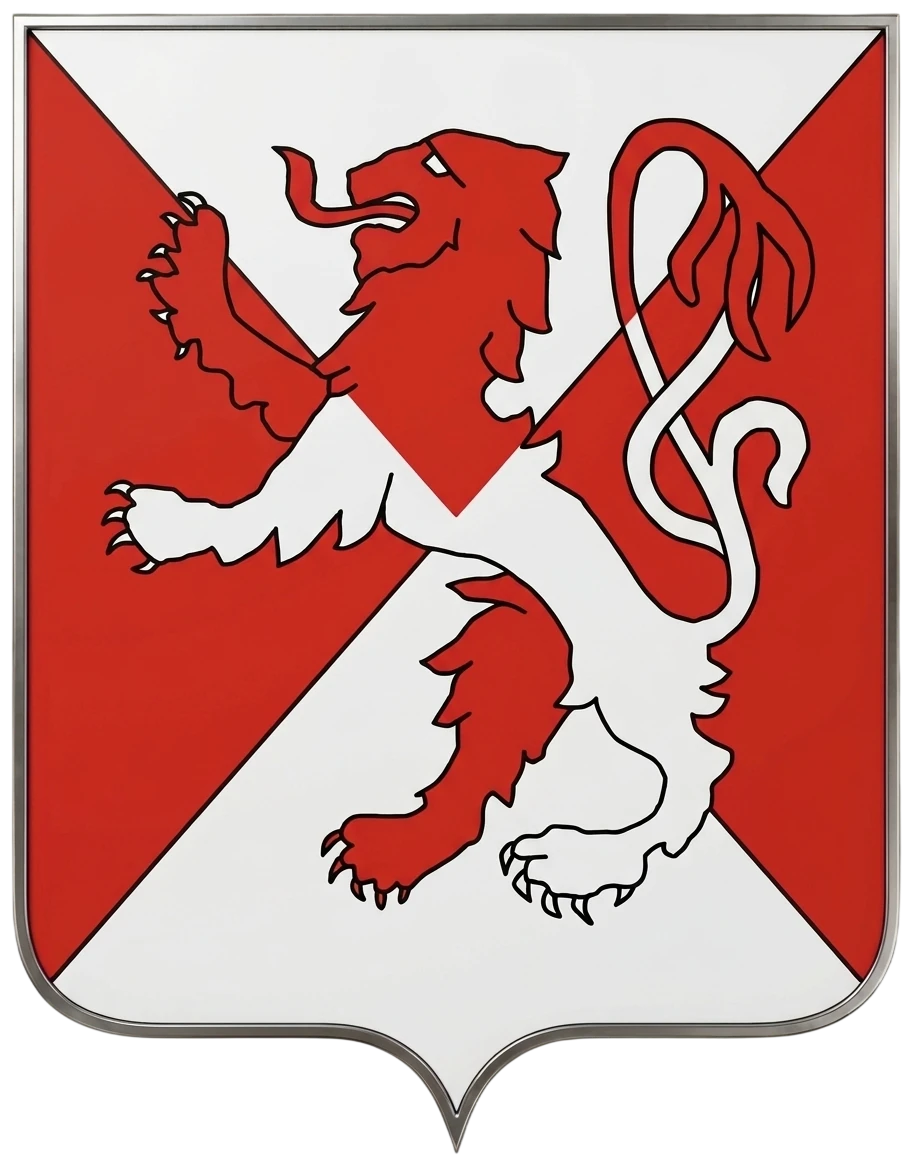
Arms known as Guido Guerra: lion gules brochant over a partition
II.

"Guido Guerra"

Famous among the Guidi is the series of the "Guido Guerra", a nickname which — according to Boccaccio — sprang from an innate vocation for arms. Guido Guerra I frequented the court of Matilda of Canossa, who in 1099 declared him her adoptive son. At this stage the lion becomes more martial, superimposed on the partition of the shield.

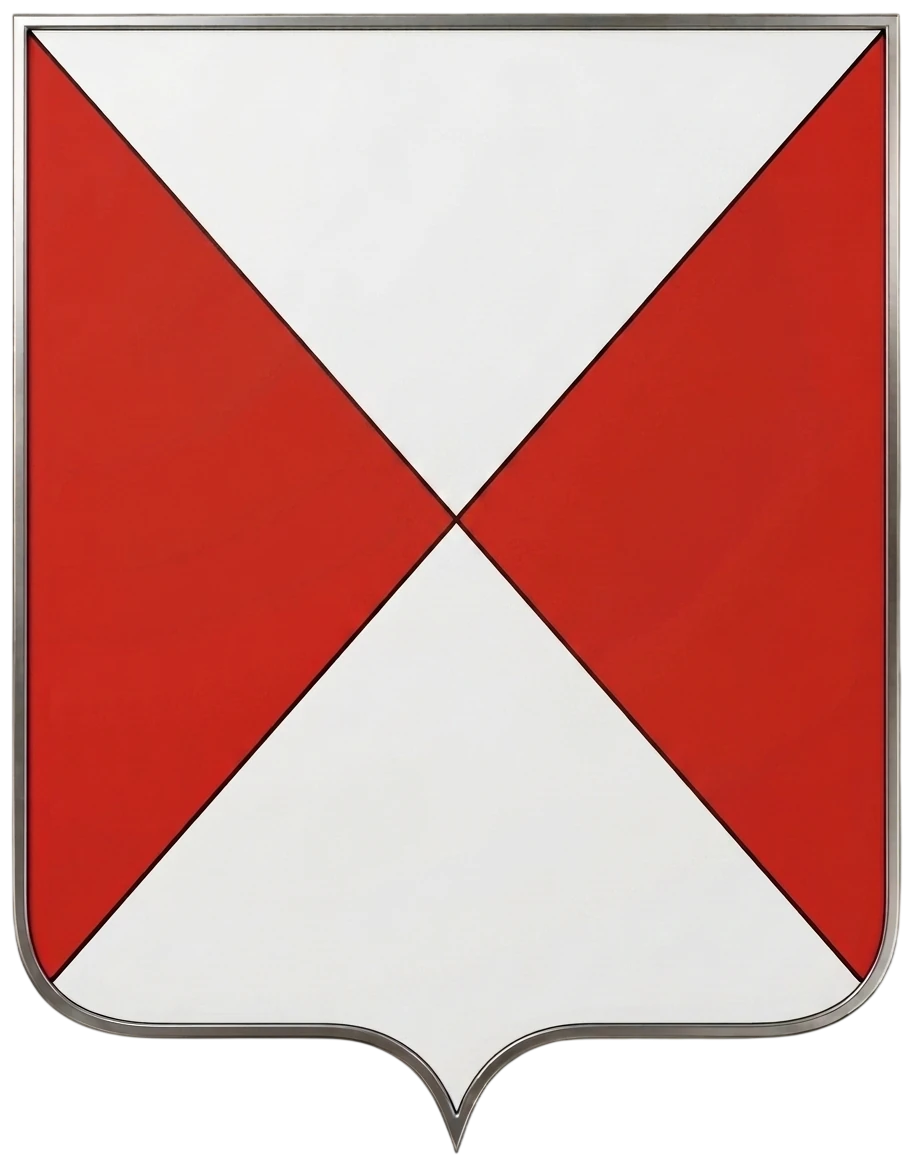
Arms of the Conti Guidi: quarterly per saltire gules and argent
III.

The Conti Guidi, Counts Palatine of Tuscany

With the imperial protection of Frederick Barbarossa and then of Frederick II — who in 1217 confirms to the Guidi a list of about two hundred fiefs — the arms settle into the form that would remain canonical. Ancient arms often used only a single pair of colours: the Conti Guidi adopt the shield quarterly per saltire (saltire cross), gules and argent.

Arms of the Conti Guidi of Porciano: saltire cross vert and argent
IV.

The Conti Guidi of Porciano

At the division of the great Guidi domain four branches arise. Tegrimo VI gives rise to the Counts of Porciano. Here a decisive heraldic passage takes place: each branch, while keeping the original partition of the arms, adopts a particular two-colour scheme. The Porciano keep the saltire cross but change its tinctures — gules gives way to vert. It is at this moment that green enters the lineage, never to leave it again.

Motto: "Chi ha la bona fama et poi la perde, racquistare la puo' ma non si verde".

"He who has good fame and then loses it may regain it, but it never grows green again"

See the Porciano page

Guerra arms: bend argent on a field vert
V.

Guerra / de Guerris / Guerri

Among the descendants of Tegrimo VI, Guido "Zeffiro" and his son Giovanni lose all their possessions in 1336 to the Republic of Florence. The grandson Pietro moves to Siena and, having lost his feudal rank, must take a surname to be counted among the citizens: in the documents he now appears as Guerra, Guerrae, de Guerris, Guerri. The white-and-green two-colour scheme is preserved, but the partition becomes typically Ghibelline: bend argent on a field vert.

See the Guerri page

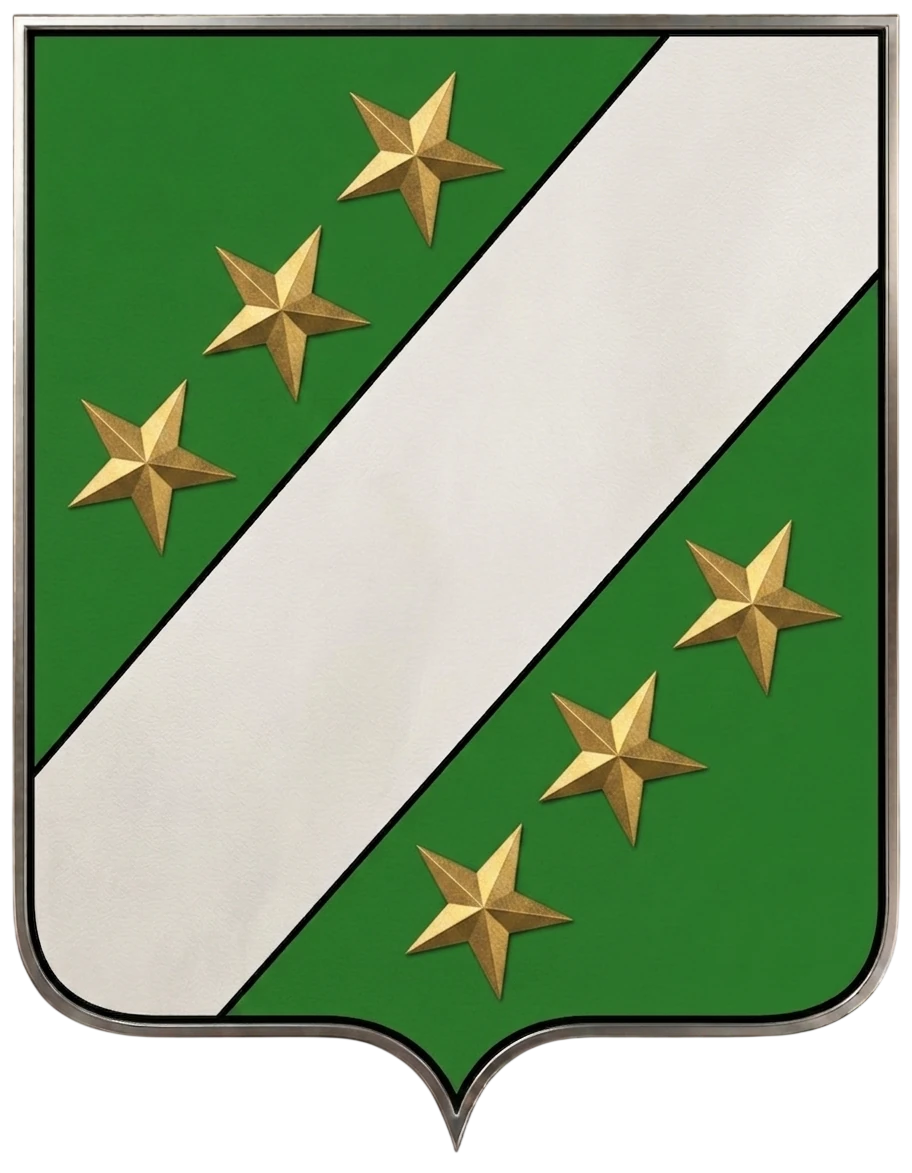
Guerri arms: bend argent and six mullets or on a field vert
VI.

The Guerri

The surname now stabilised, the Guerri obtain enrolment in the patriciate of Siena. To the shield are added six stars (mullets) or, a frequent symbol of nobility in the 16th century.

Motto: "Dalla guerra alla pace".

"From war to peace"

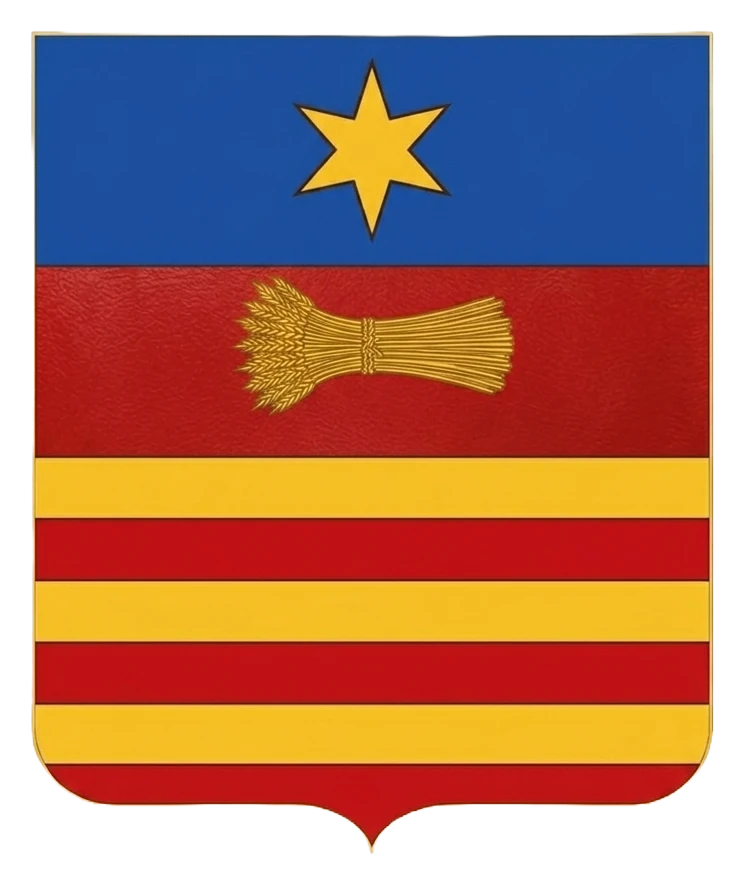
dall'Oro arms: star or on a field azure and a sheaf of ears of wheat
VII.

The dall'Oro

Originally from Padua (1200), where they were called "da Rio", the dall'Oro move to Treviso around 1300 and take their name from the goldsmith's craft they practised. Counted among the nobles of Treviso, they gave Gonfaloniers of Justice and Captains of the People to Bologna in the 15th century. Their canting arms unite the star or on a field azure and the sheaf of ears of wheat or. The house dies out with Dejanira dall'Oro (1835–1900).

Motto: "Nihil ab auro potest qui aeternum non est".

"Nothing can come from gold for one who is not eternal"

See the dall'Oro page

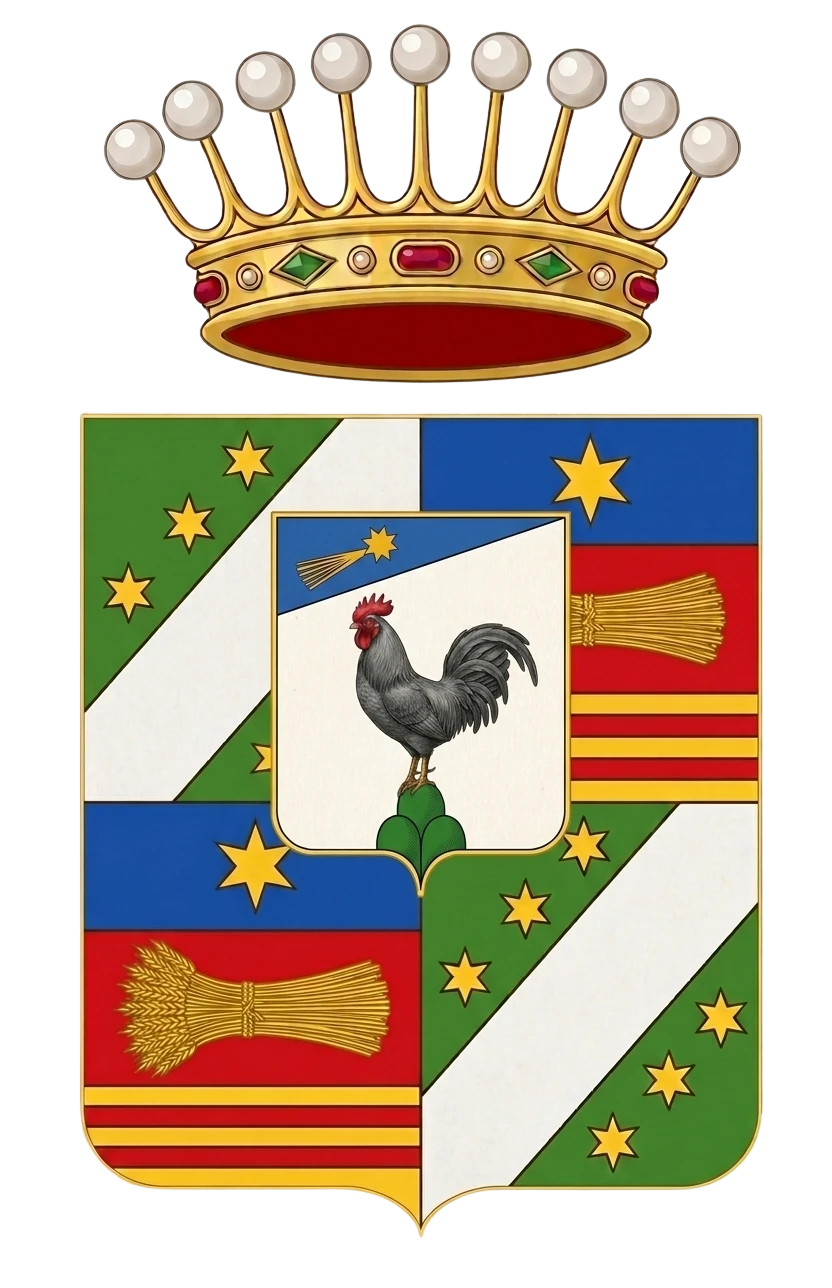
Quartered arms Guerri dall'Oro
VIII.

The Guerri dall'Oro

In 1862 the nobleman Pietro Giovanni Guerri (1819–1880), officer at the Grand-Ducal Court of Tuscany, marries Dejanira dall'Oro, last of her house, and adds her surname to his own. The two arms merge into a quartered shield: in the 1st and 4th the Guerri, in the 2nd and 3rd the dall'Oro. It is the heraldic birth of the compound name.

Motto Guerri: "Dalla guerra alla pace" — "From war to peace".

Motto dall'Oro: "Nihil ab auro potest qui aeternum non est" — "Nothing can come from gold for one who is not eternal".

See the Guerri dall'Oro page

Profile of Pietro Giovanni Guerri dall'Oro

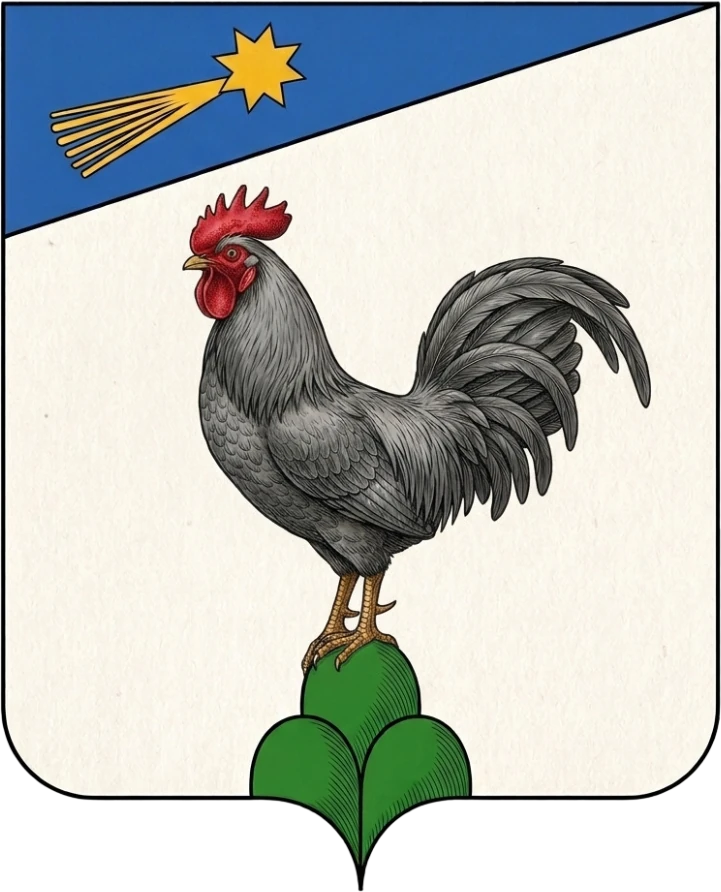
Gallone arms: cock on a mount vert, chief azure with a comet or
IX.

The Gallone

Stefano II Gallone (1601–1662) obtains the title of Prince of Tricase in 1651. Giuseppe Gerardo Gallone, 6th Prince of Tricase, marries Emanuela Pignatelli, heiress of the Principalities of Moliterno and Marsiconovo. Their canting arms are a cock standing on a mount vert (galloGallone), surmounted by a comet or on a chief azure. The house dies out with Maria Bianca Gallone, 10th Princess of Tricase (1895–1982).

Motto: "Nunc et semper".

"Now and always"

See the Gallone page

Profile of Stefano II Gallone

Profile of Maria Bianca Gallone

Profile of Maria Emanuela Pignatelli

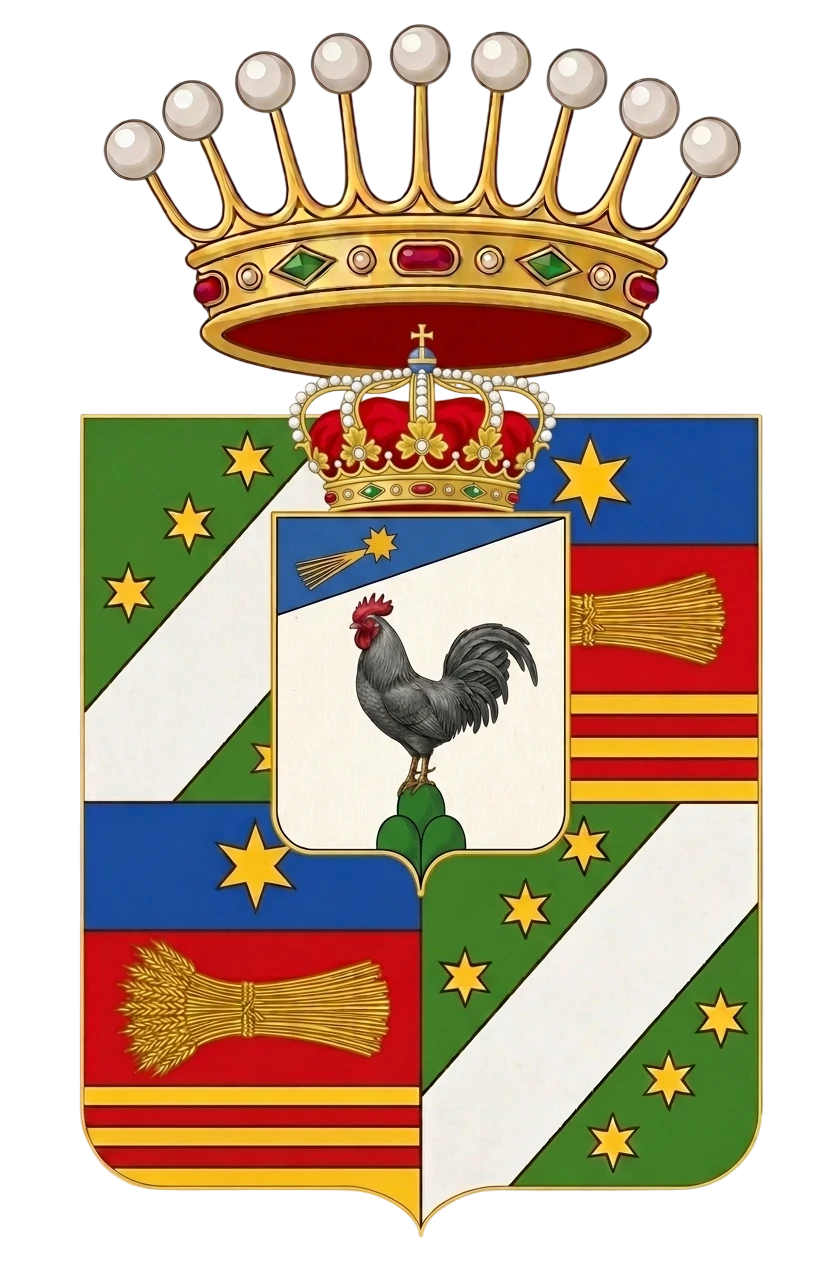
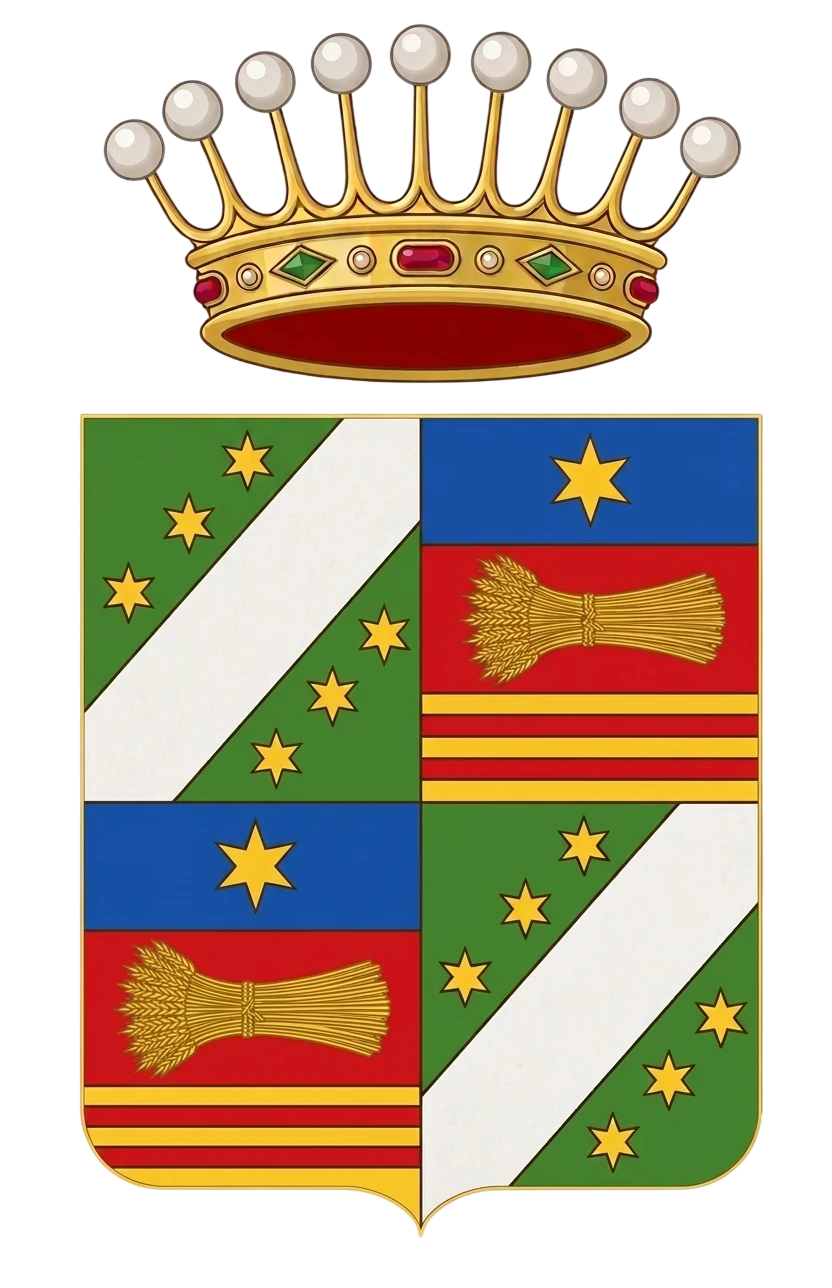
Complete arms Guerri dall'Oro Gallone, Princes of Tricase and Moliterno, with crown
X.

Guerri dall'Oro Gallone, Princes of Tricase and Moliterno

All the lines converge into a single coat of arms. By the decree of King Umberto II of 19 November 1967, the title of Count was granted to Aldo Guerri dall'Oro, and that of Countess to his wife Simonetta della Posta — daughter of Maria Bianca Gallone, last Princess of Tricase. By Decree of the Minister of Grace and Justice of 21 January 1999, the descendants take the surname Guerri dall'Oro Gallone di Tricase e di Moliterno.

The arms reflect exactly this history: the coat of arms is that of the Guerri dall'Oro, onto which is set that of the Gallone. On the Guerri-and-dall'Oro quartering is placed in the heart the inescutcheon with the Gallone cock; the whole is crested by the crown of a prince.

The official blazon reads: quarterly — in the 1st and 4th vert, a bend argent accompanied by six stars or (Guerri); in the 2nd and 3rd tierced in fess: in the 1st azure a star or, in the 2nd gules a sheaf of ears of wheat or tied in a ring, in the 3rd barry of six argent, or and gules (dall'Oro); over all, the Gallone inescutcheon.

In this single shield is summed up the whole story of the House: the Tuscan stock of the Conti Guidi become Guerri at Siena, the fusion with the dall'Oro of the Veneto, and the southern inheritance of the Gallone, Princes of Tricase and Moliterno. A heraldry that is, at one and the same time, a family tree.

Motto Guerri: "Dalla guerra alla pace" — "From war to peace".

Motto dall'Oro: "Nihil ab auro potest qui aeternum non est" — "Nothing can come from gold for one who is not eternal".

Motto Gallone: "Nunc et semper".

See the Guerri dall'Oro Gallone page

Profile of Aldo Guerri dall'Oro
Go to The House Guerri dall'Oro Gallone Explore →